Creative Enquiry
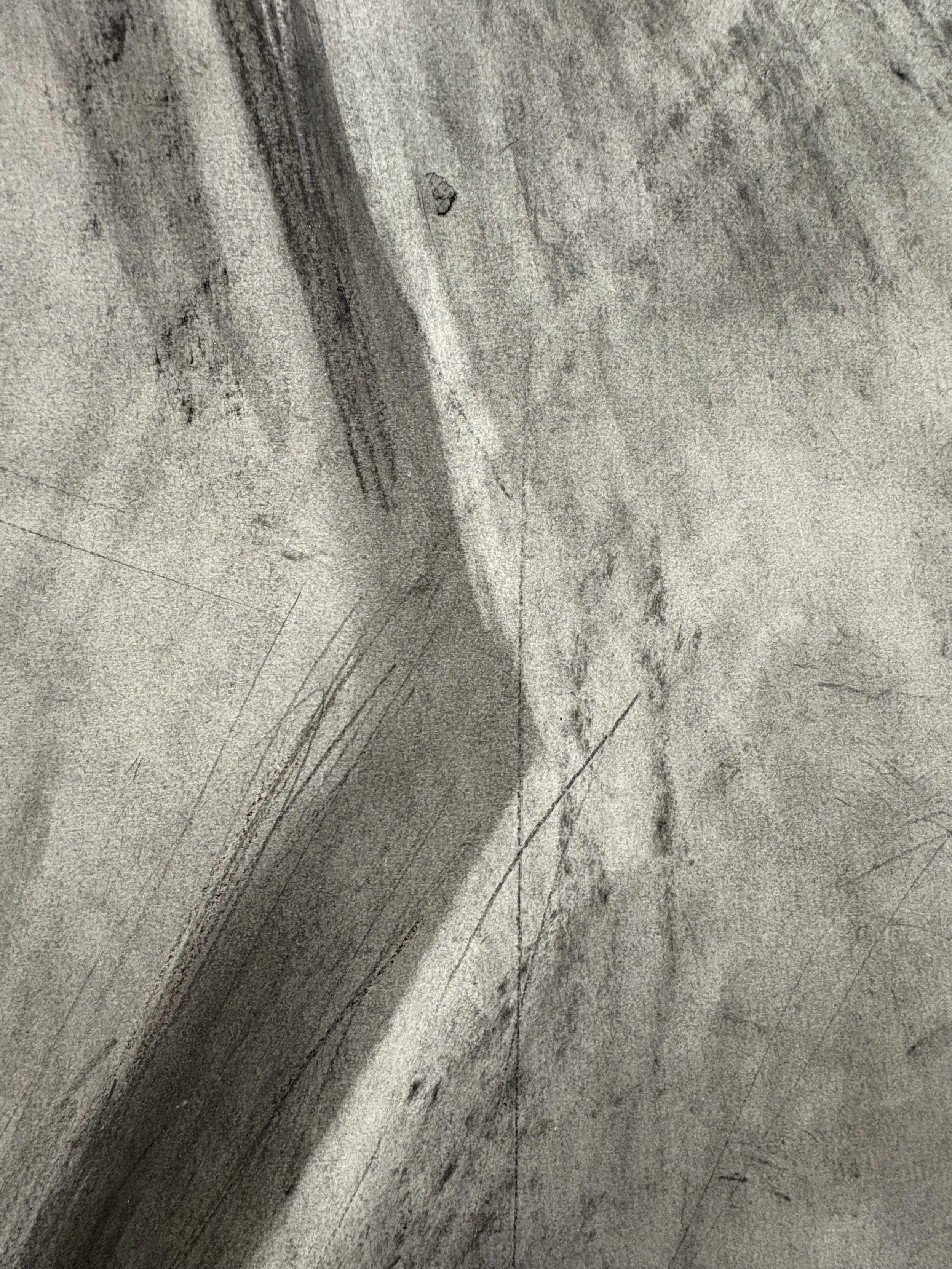
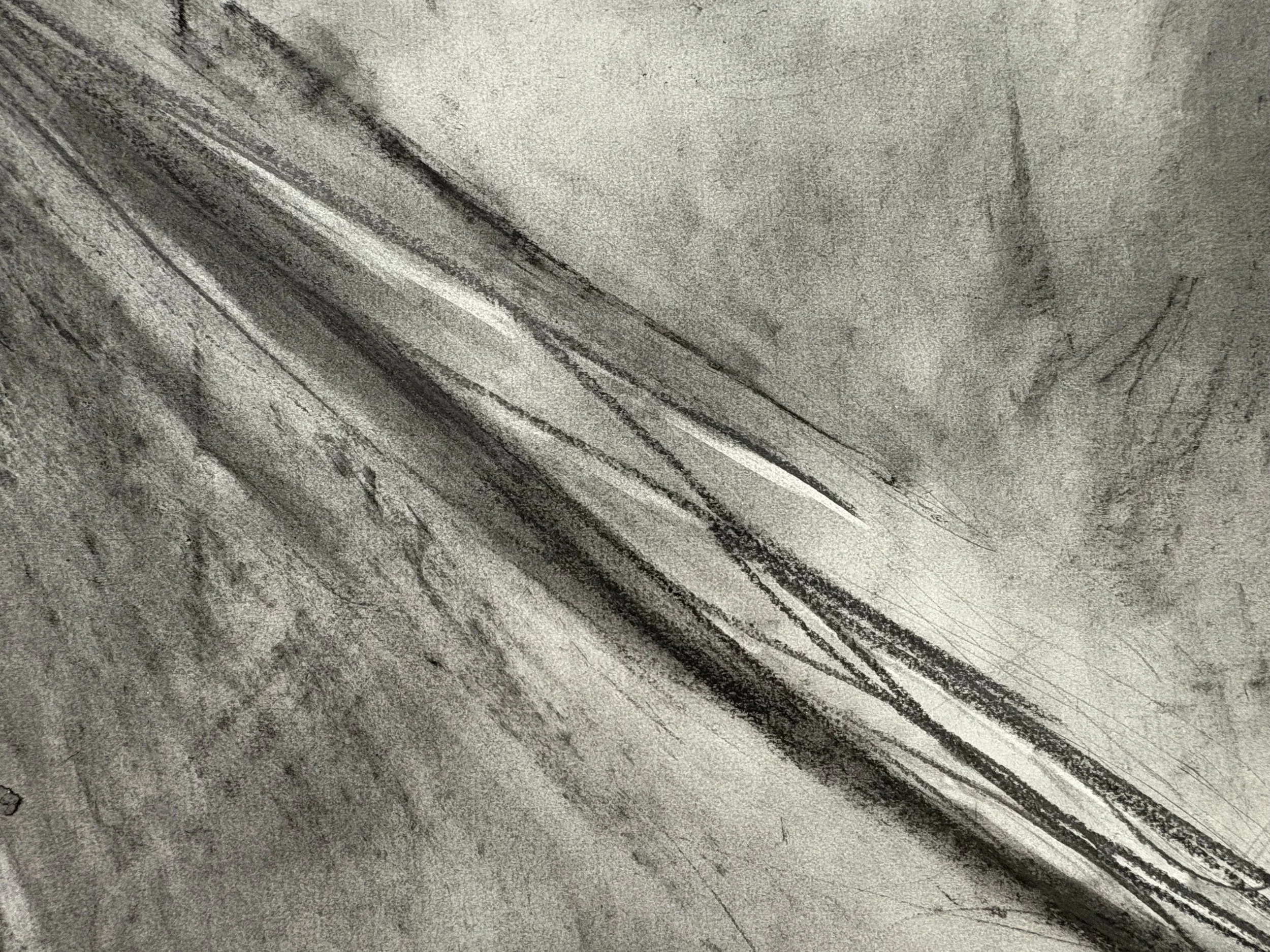
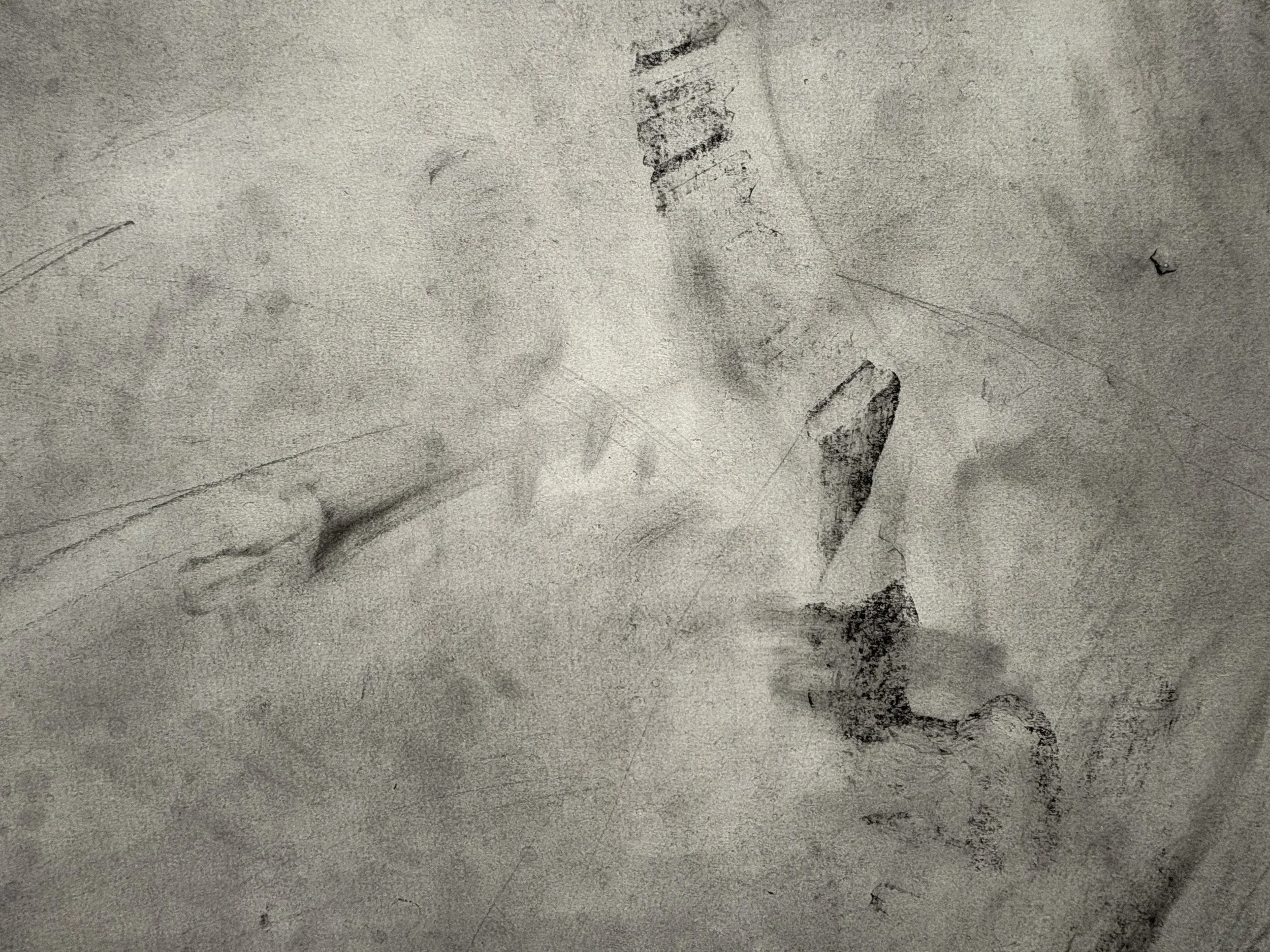
An artist’s relationships throughout their life can define their identity and practice. Is this still the case when Alzheimer’s and face blindness obscure them? Through the marks the artist makes, either bold, nonexistent or somewhere in between, the essence of their loved ones appear to a degree. This results in characteristics morphing into one with glimpses of each person shining through. This is captured through materiality and the use of delicate materials. The brittle aspect of the charcoal etc is reflective of the rawness/fragility of the artist, as they deal with the disease, with aspects of their life being whole one minute and broken the next.
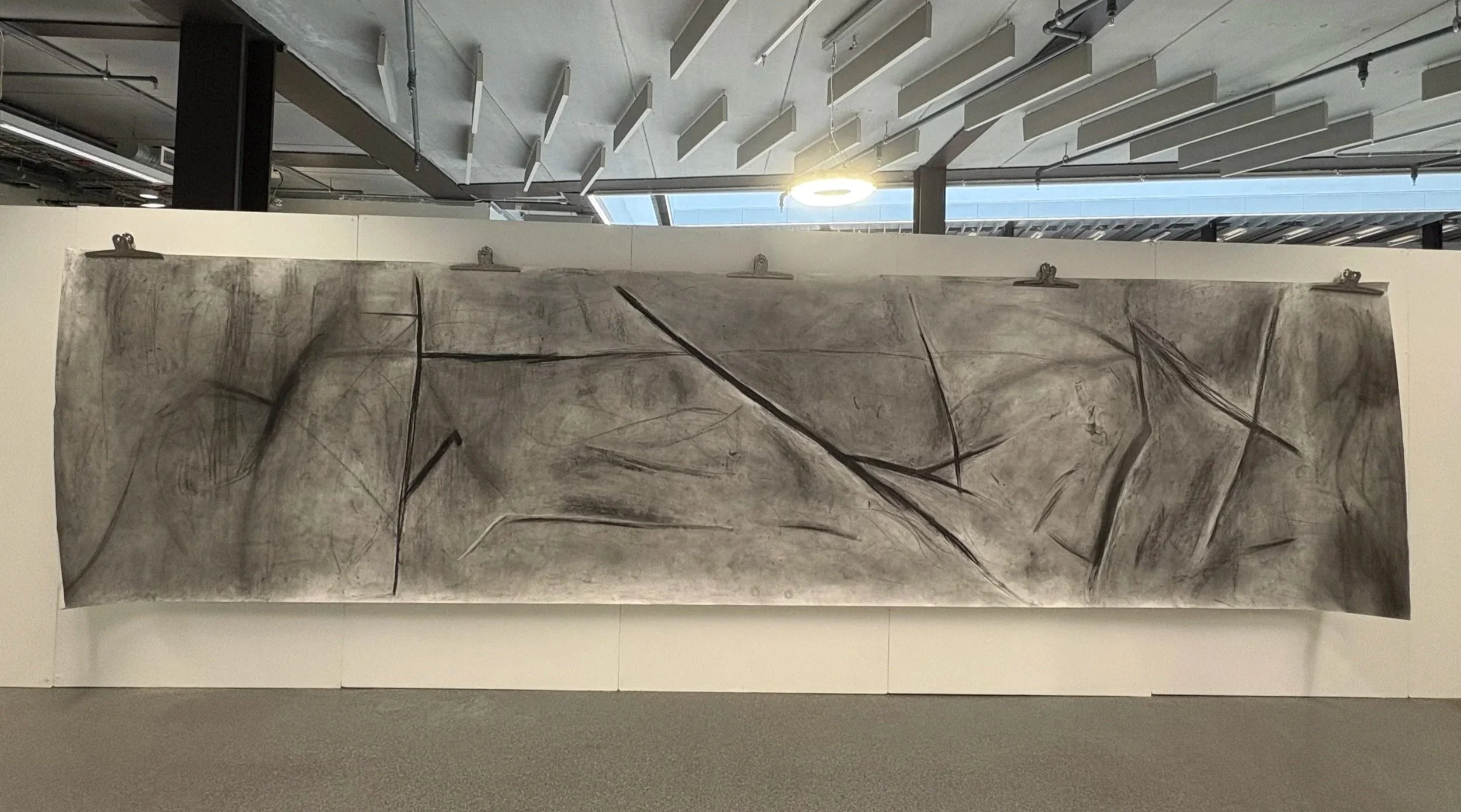
Final artwork
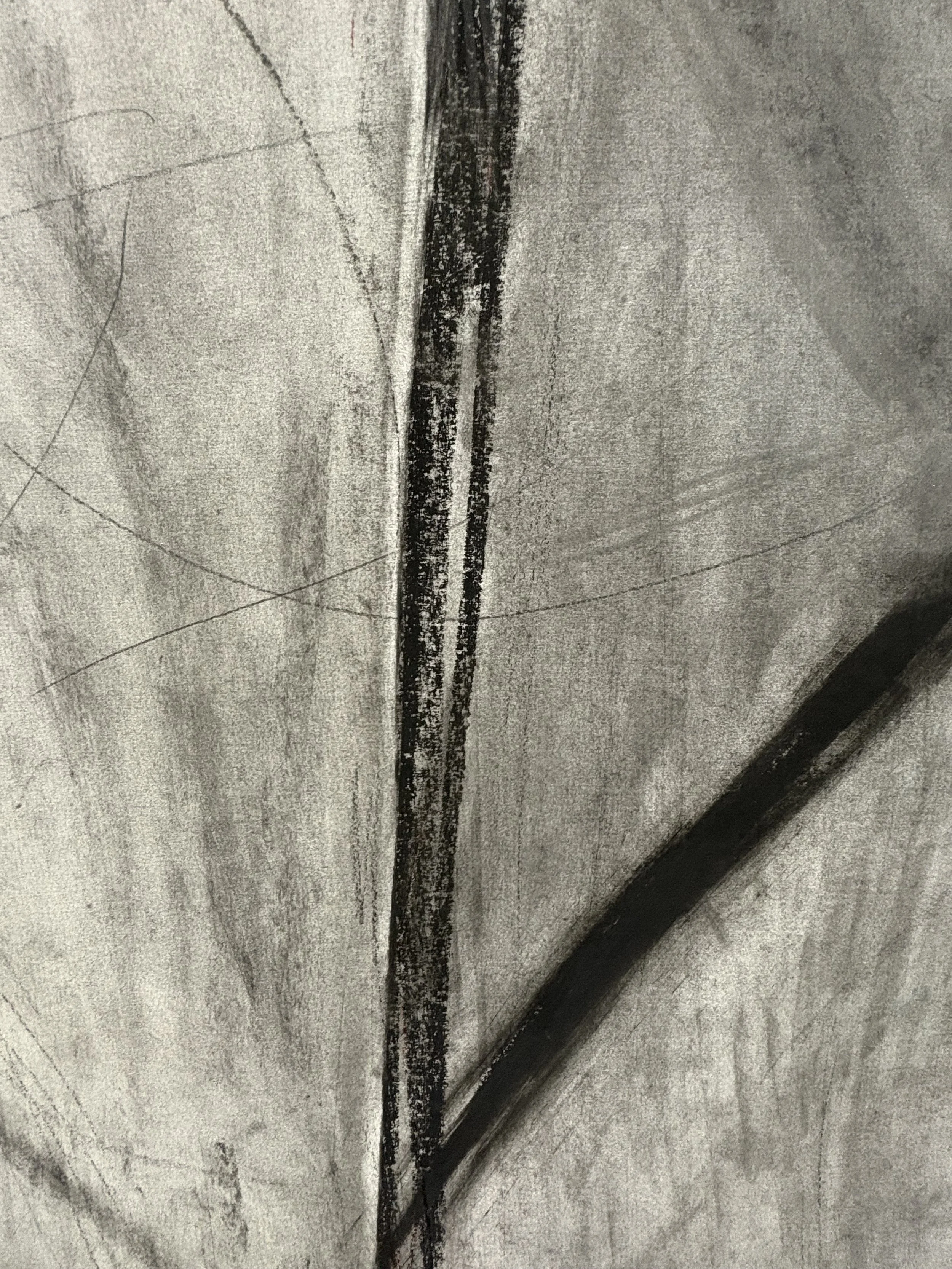
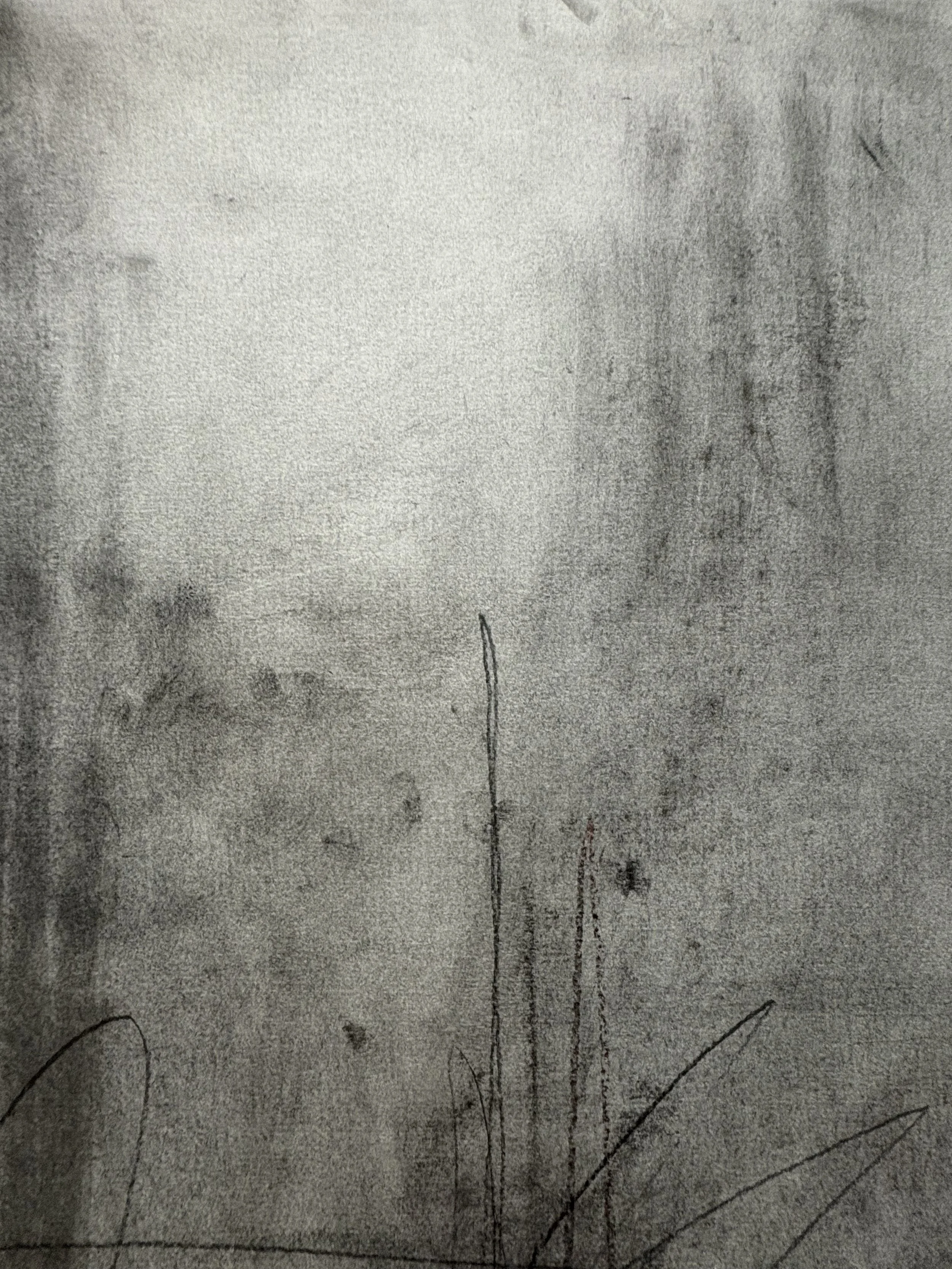
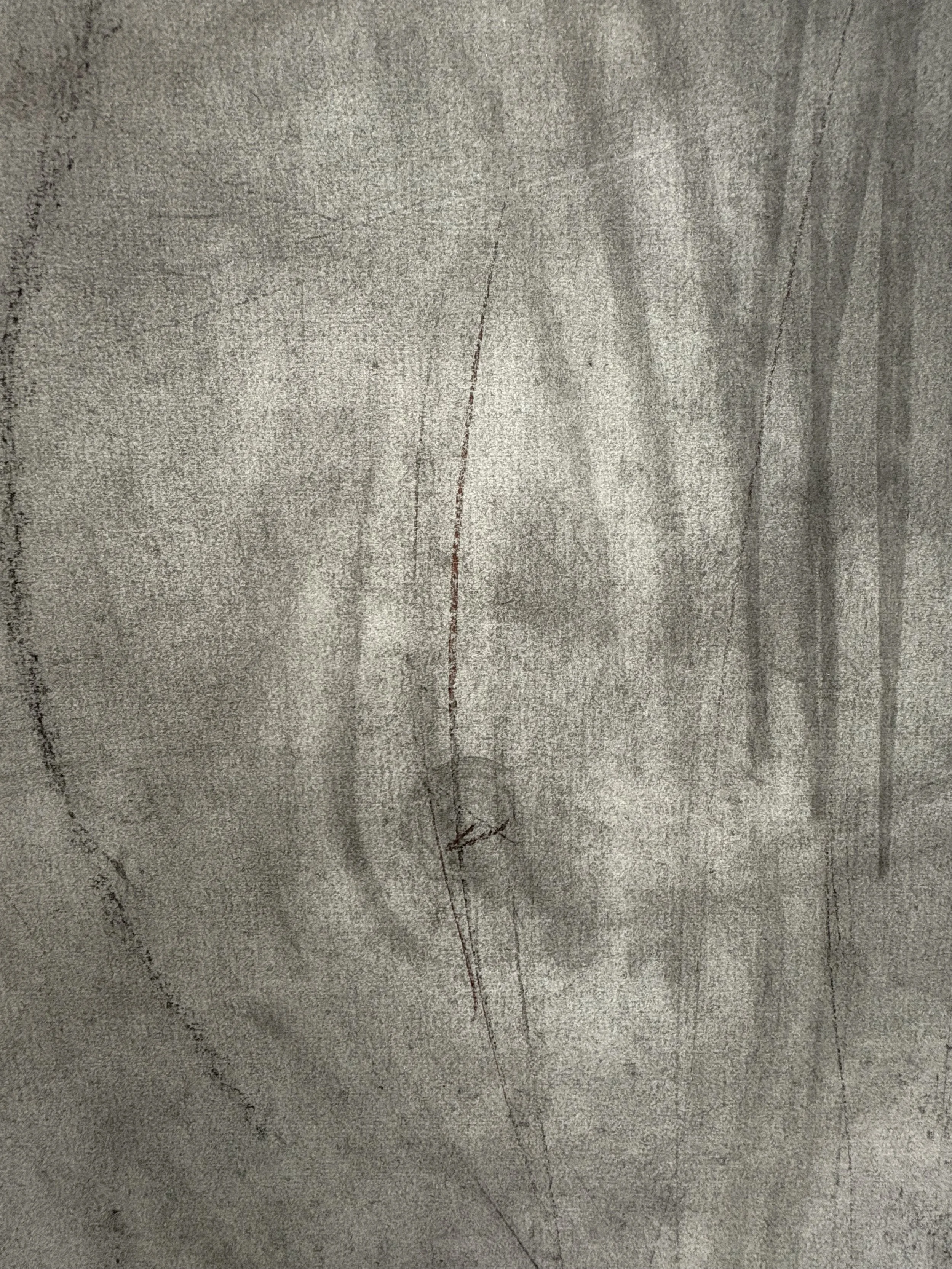
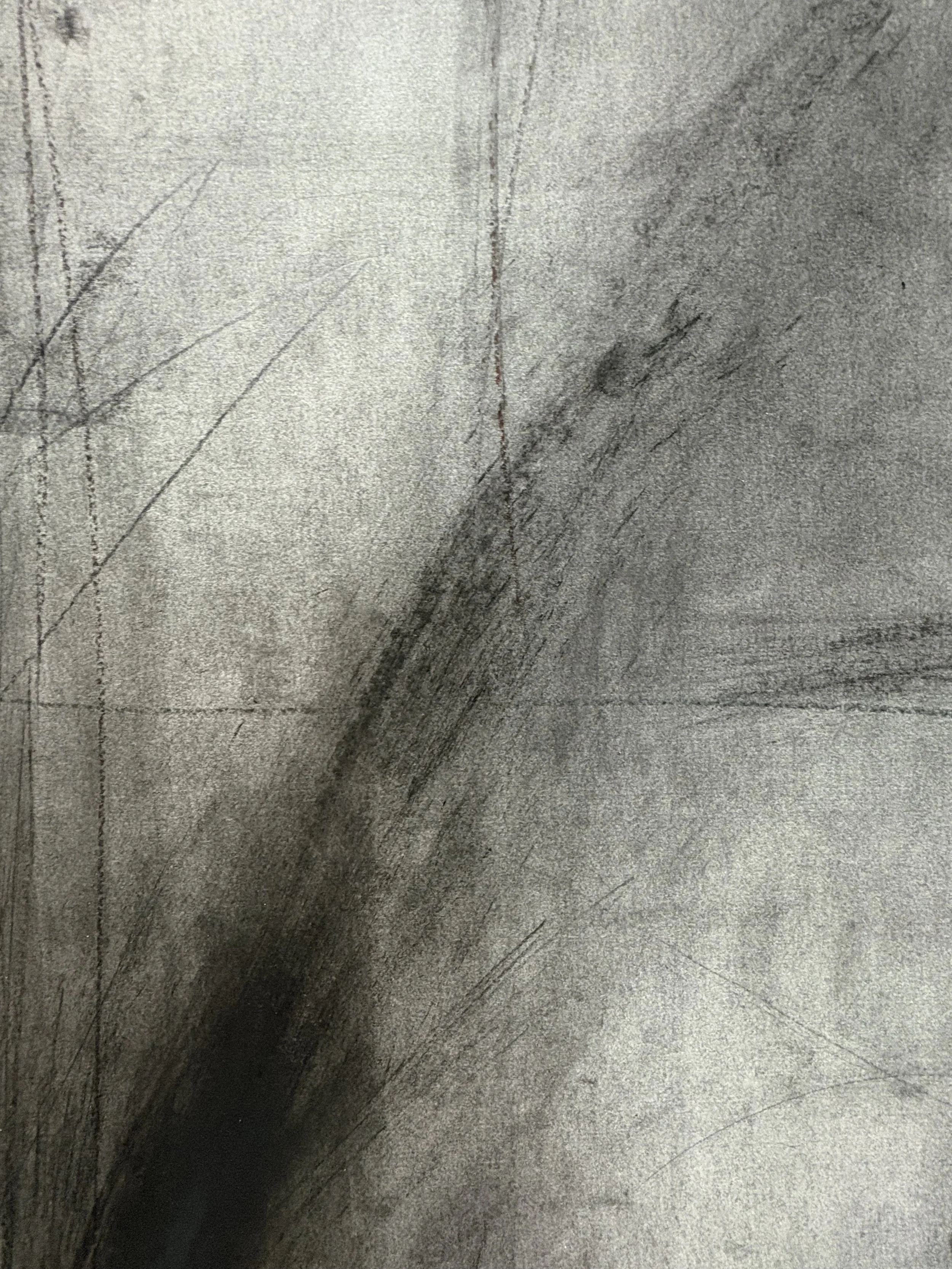
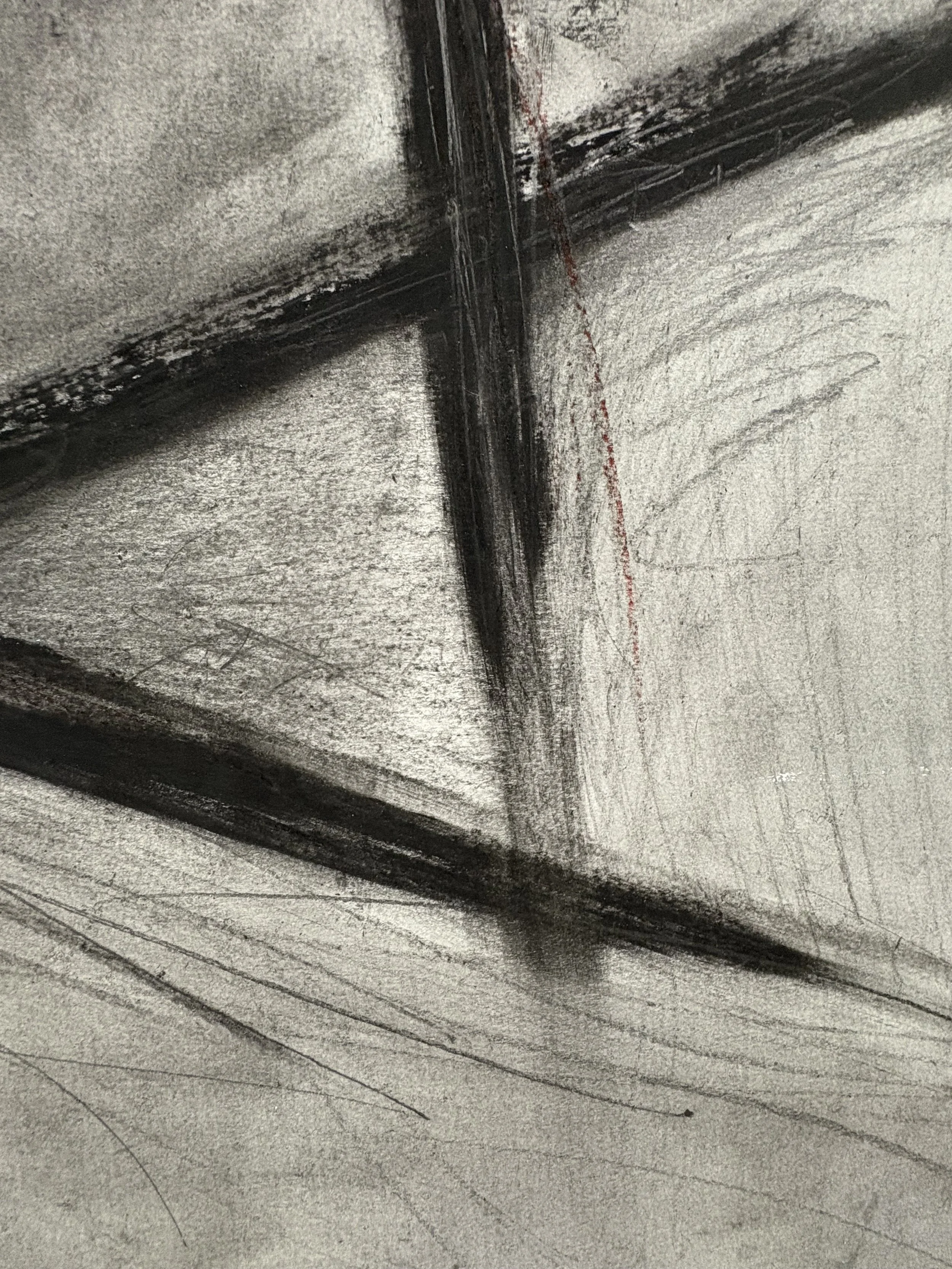
Untitled (2026) Charcoal, compressed charcoal, pencils, and graphite powder on 1.5 × 5.8m on 200gsm Fabriano paper. Close ups of final artwork
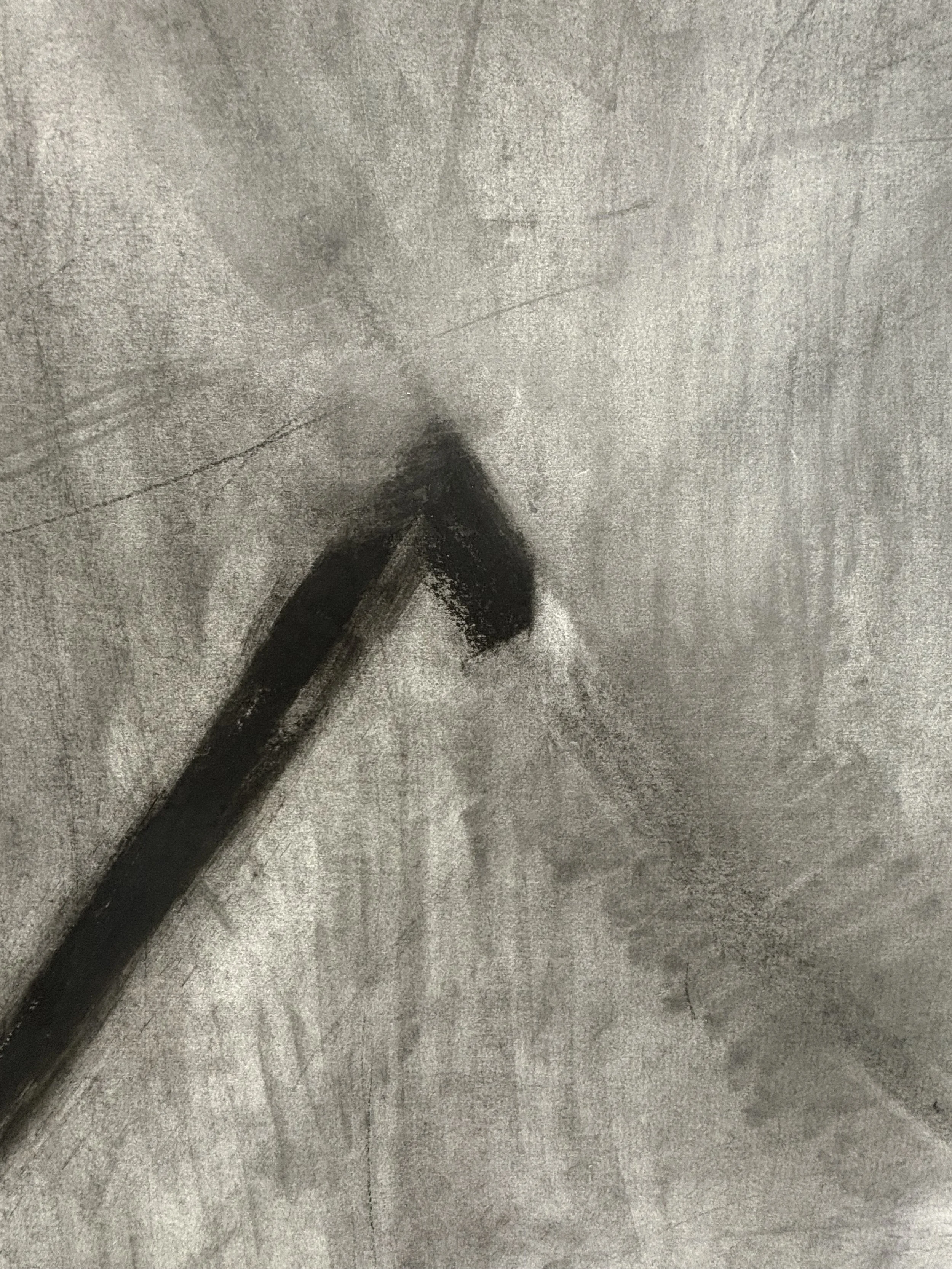
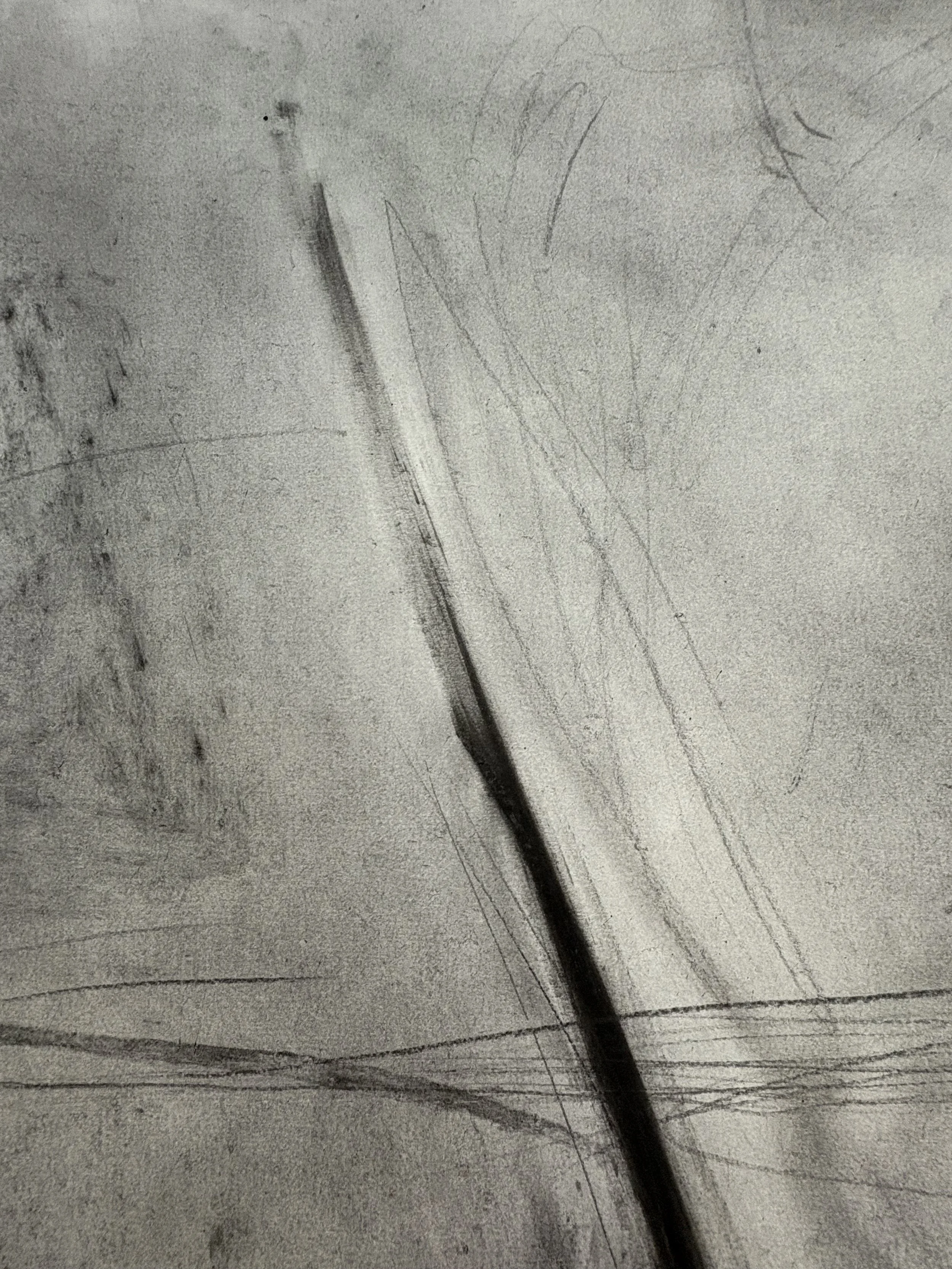
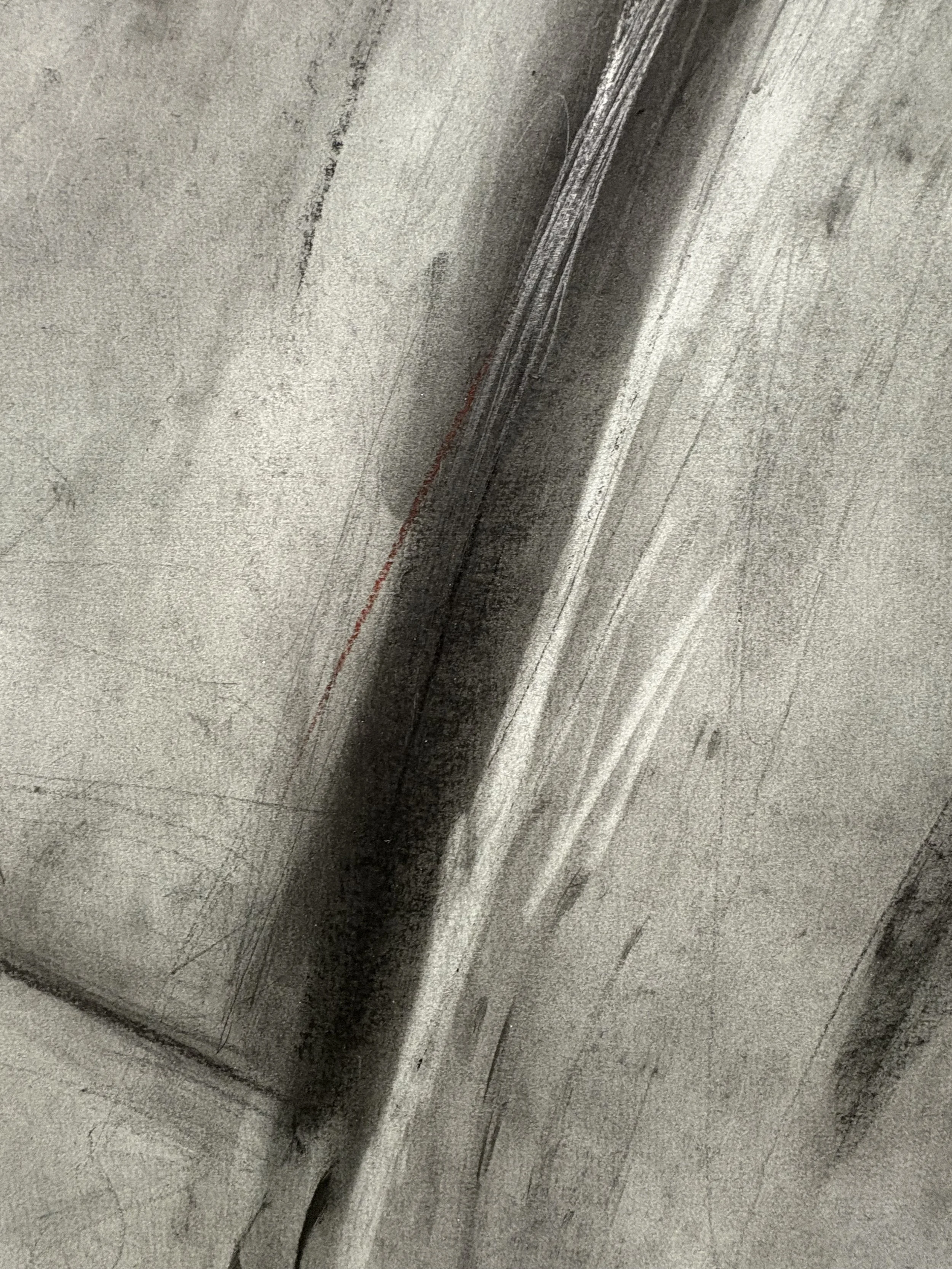
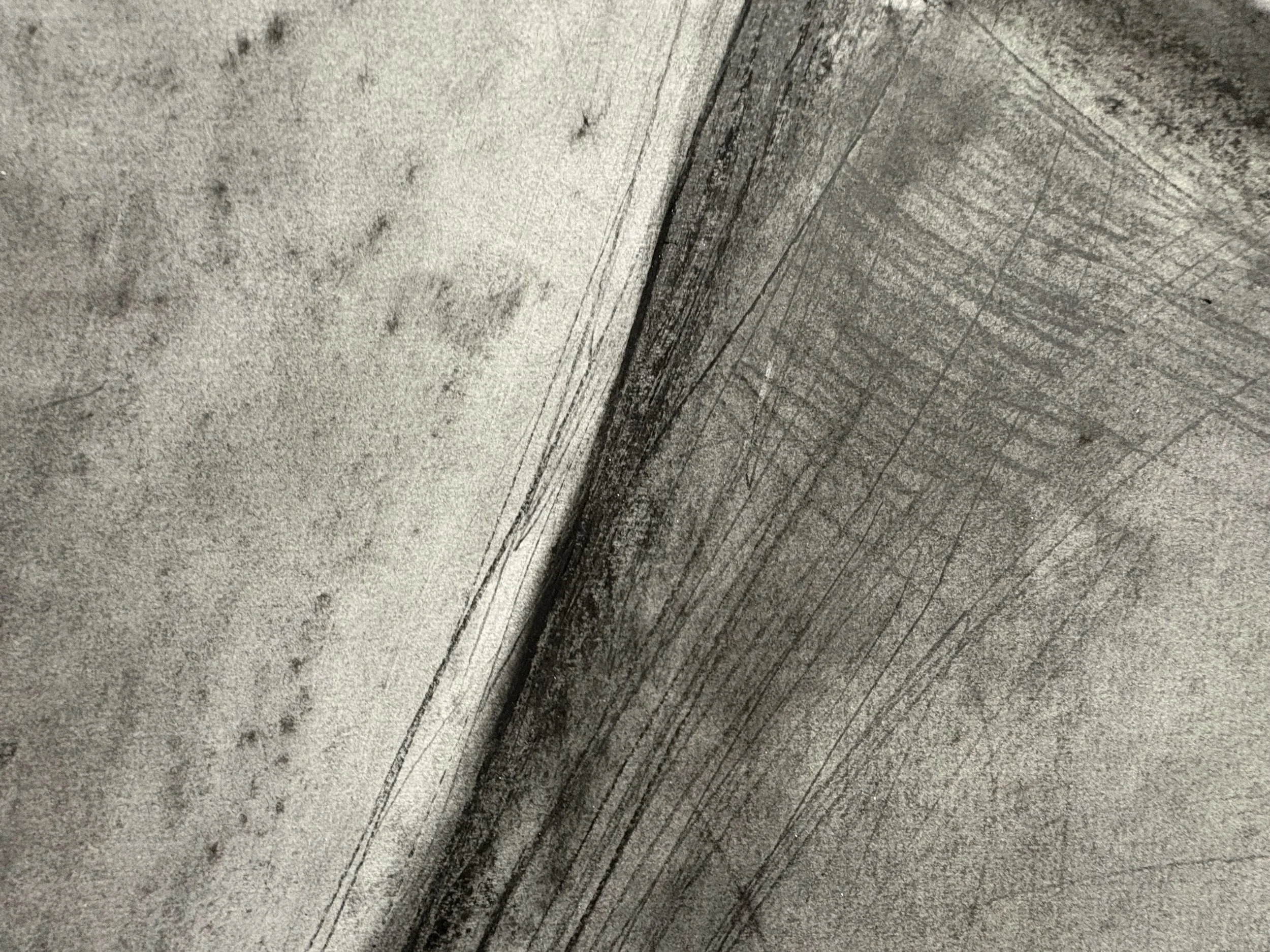
The artist
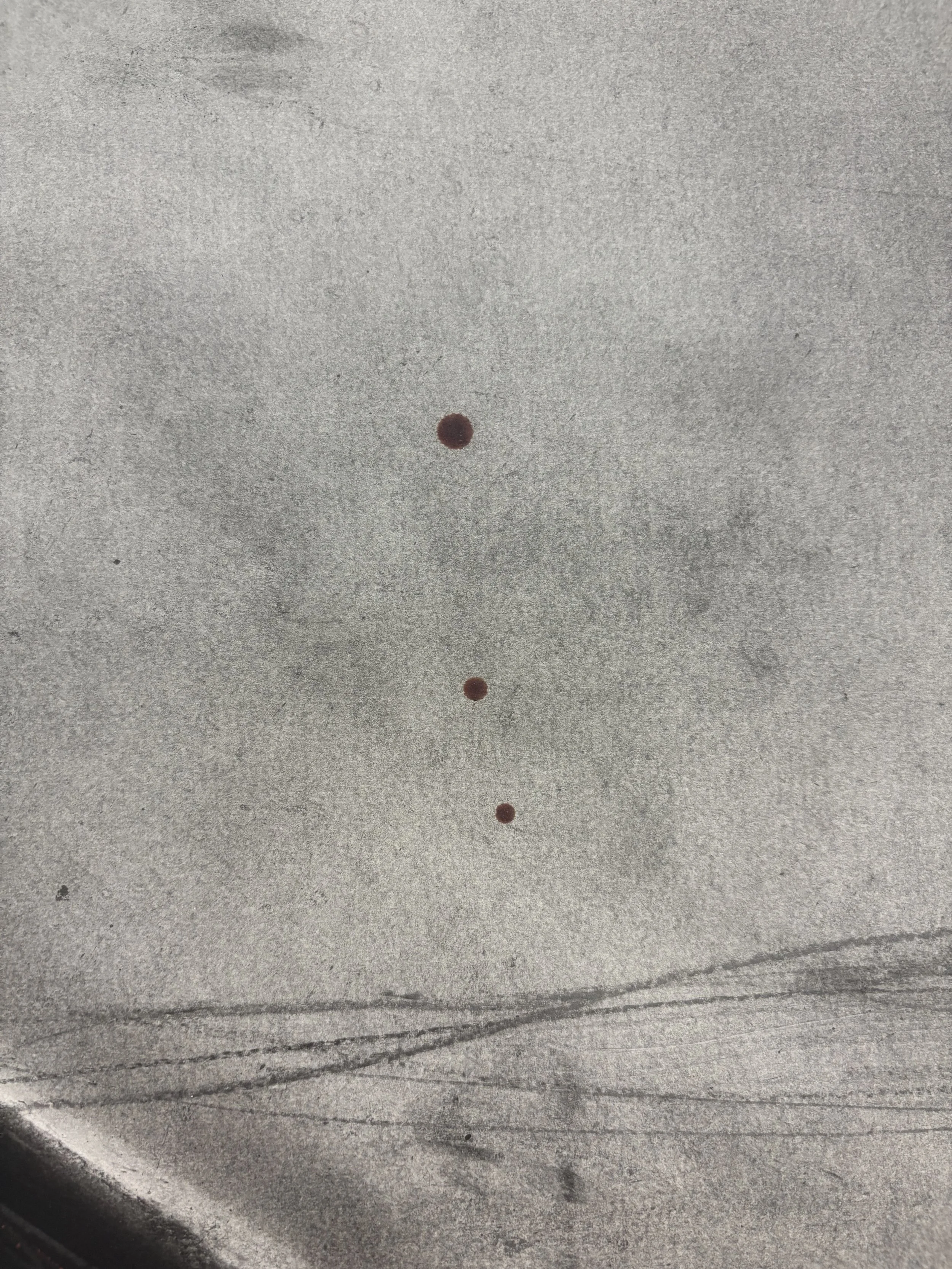
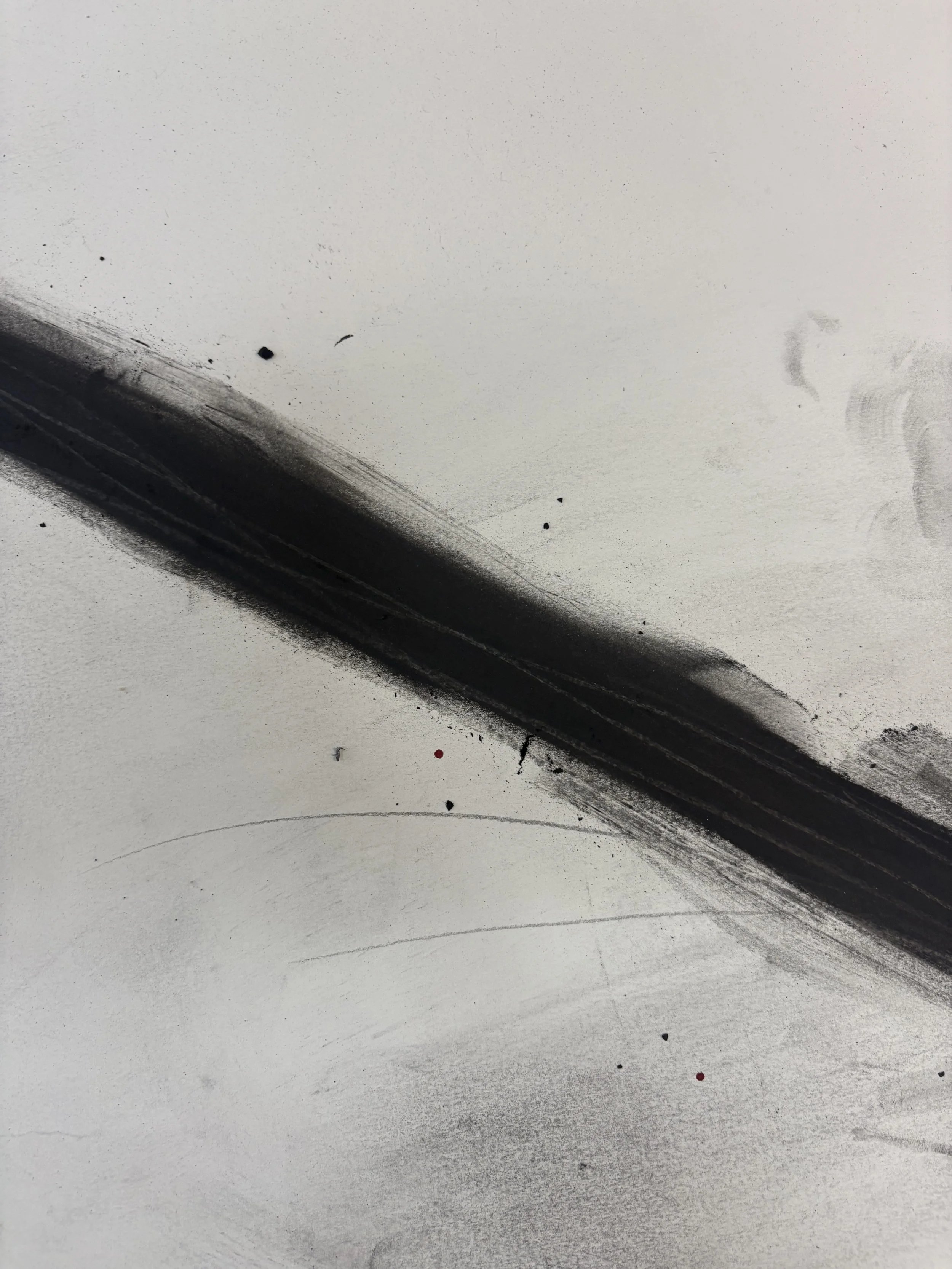
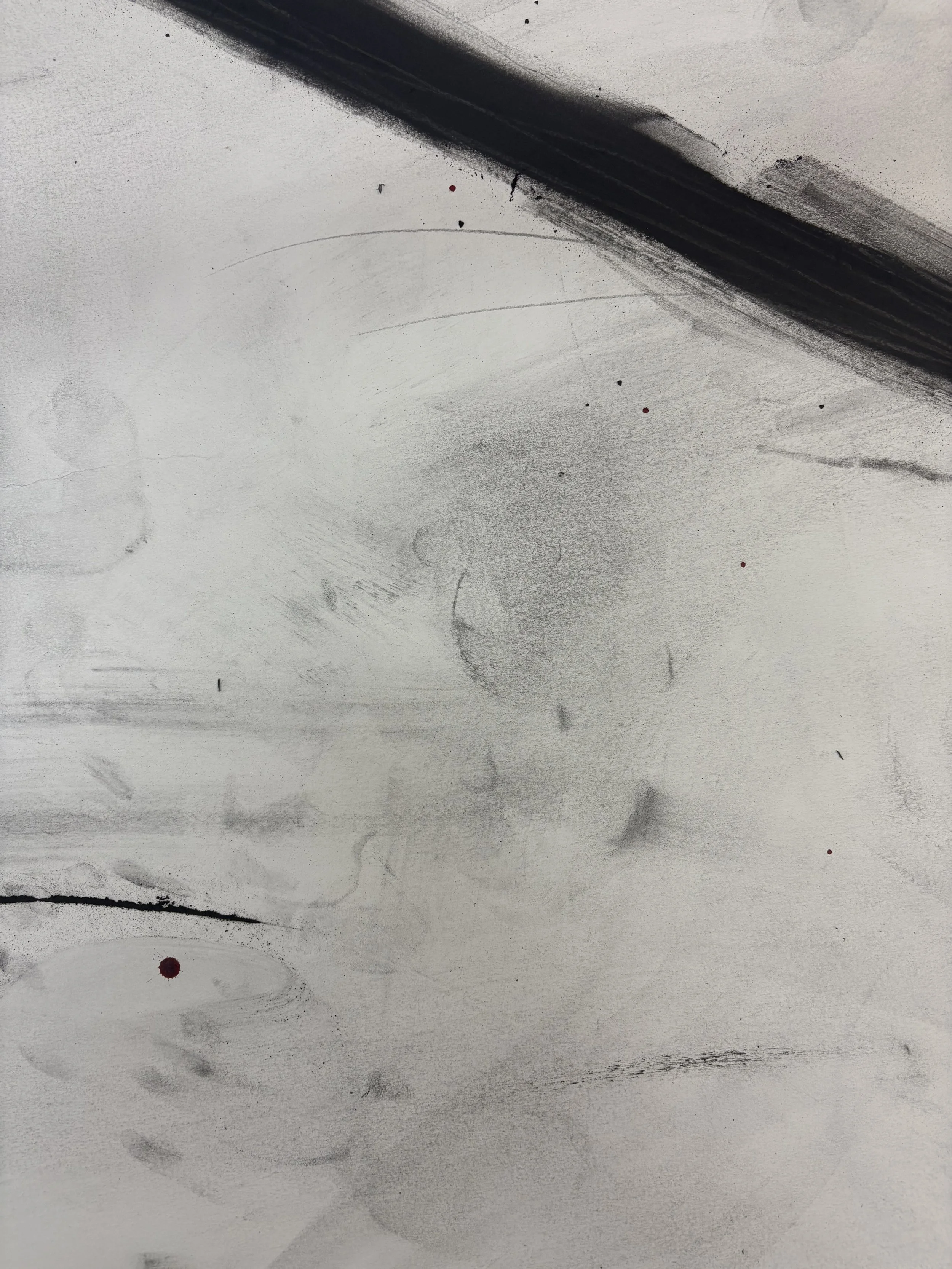
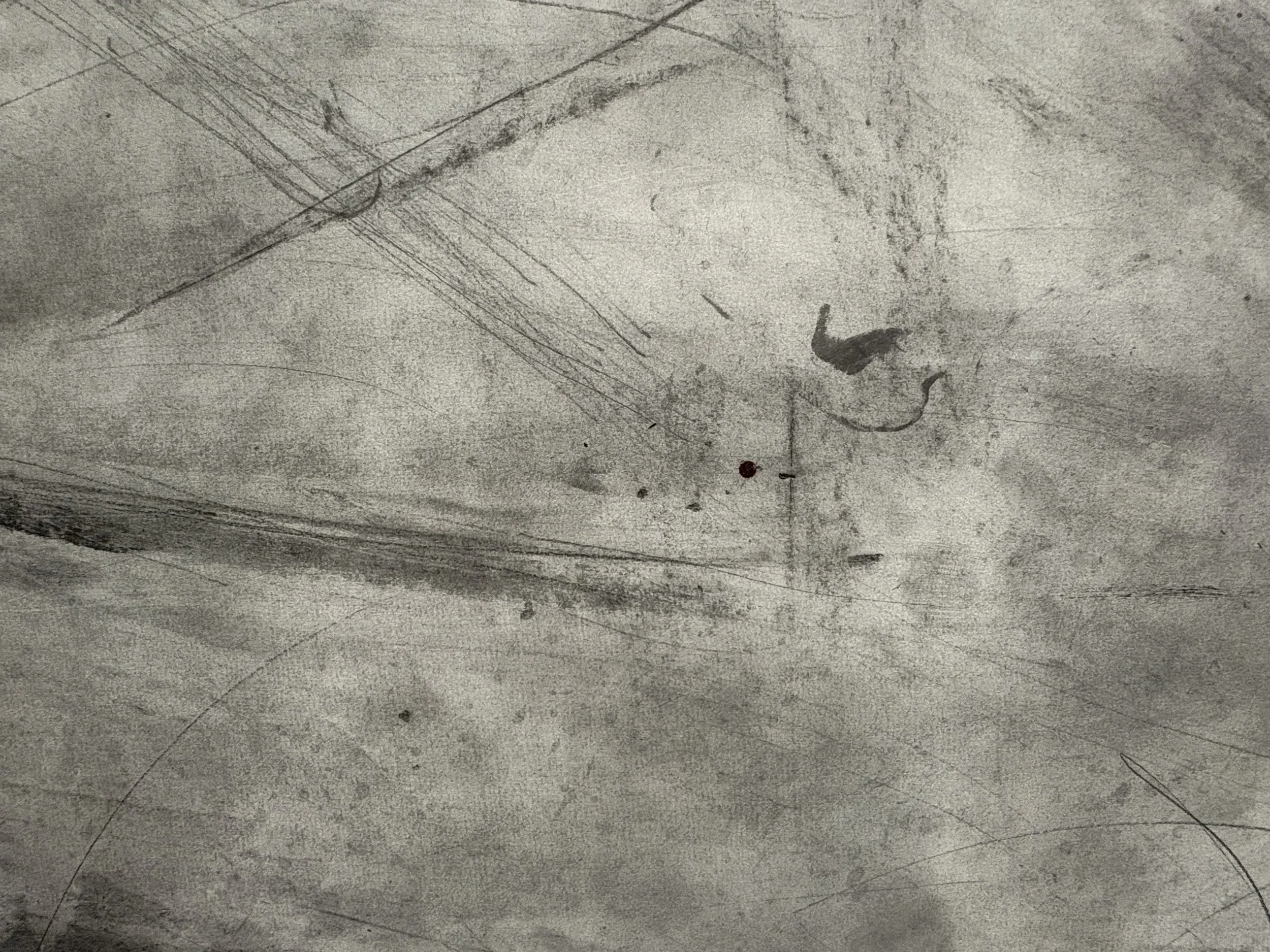
Throughout the drawing, tiny red blood droplets are visible; these are the reflection of the artist. They contrast not just in terms of colour in the drawing but also in scale and form. All other marks are sharp, while these droplets are smooth and round. These contrasting aspects highlight the artist's disconnection with their loved ones but also themselves; they are so small on the paper as they struggle to remember who they are, never mind their loved ones. The blood is also significant to the artist as it is their literal DNA, making the family portrait even more poignant; the blood and history of their family are included literally through the blood.
Process & developmental work
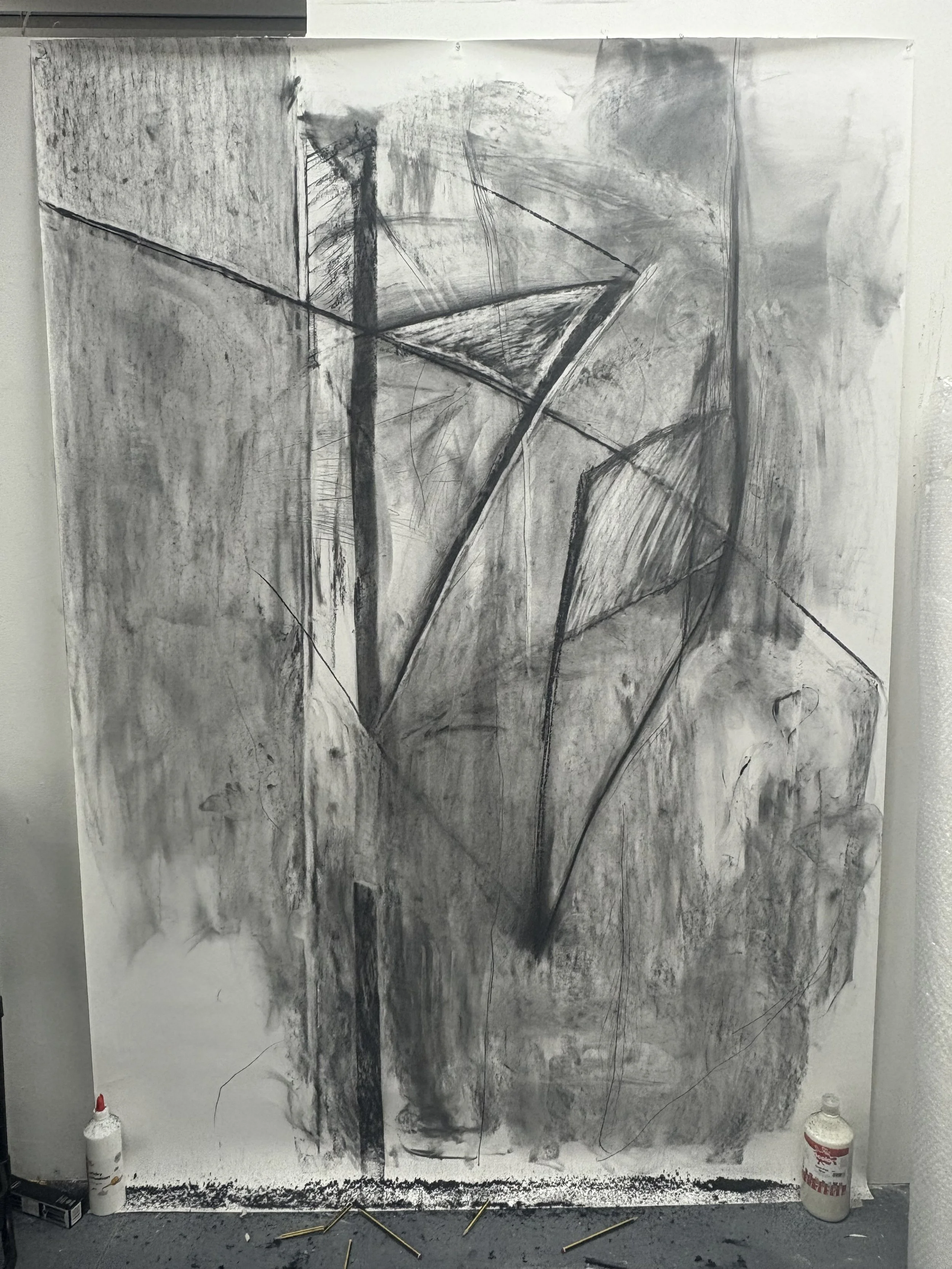
Before erasure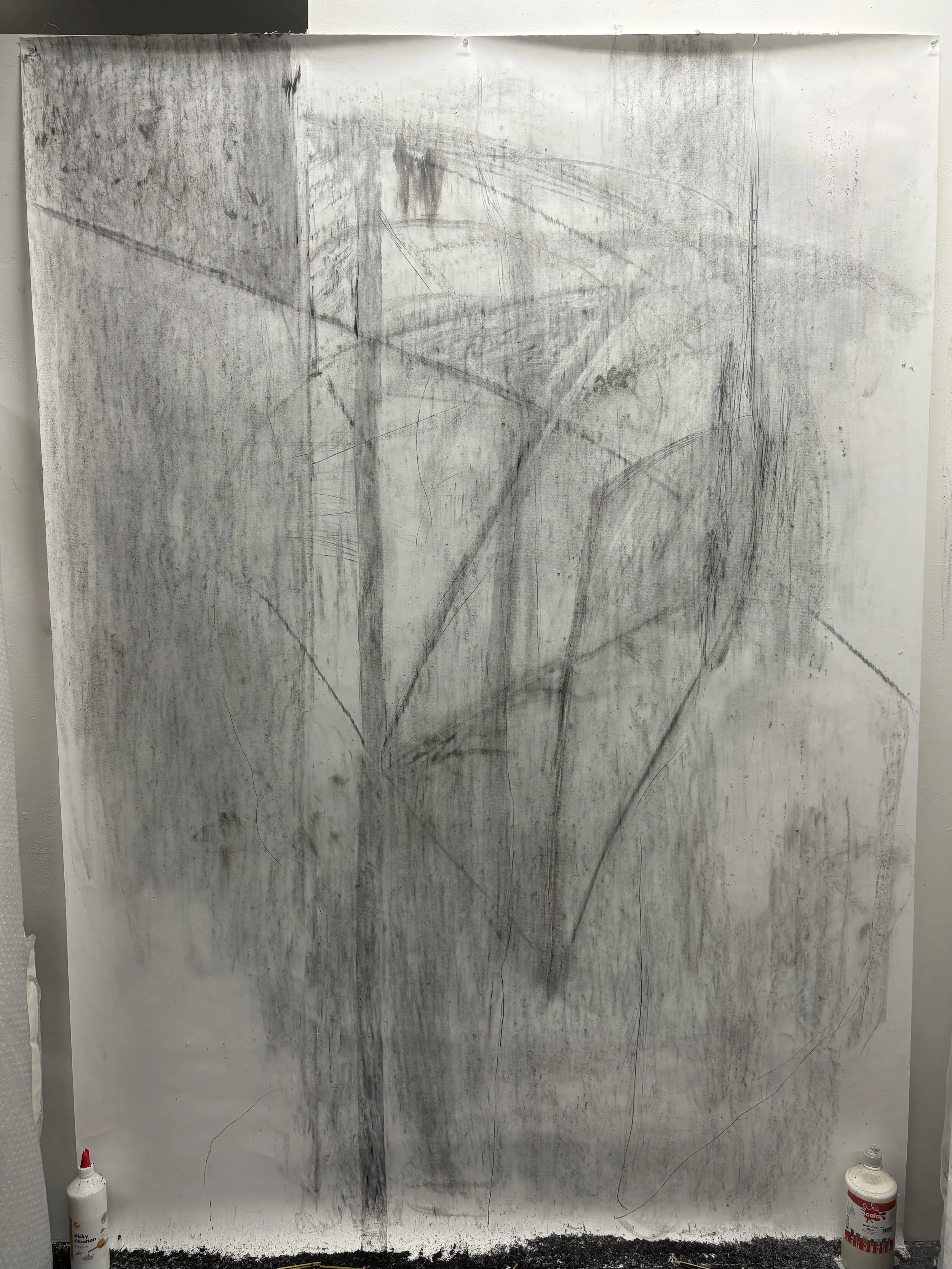
After erasure Untitled (2026) The remains of willow charcoal, condensed charcoal, graphite powder and pencils. This drawing was directly inspired by Erased de Kooning by Robert Rauschenberg. Untitled (2026) investigates the purpose of marks and how they develop and change when erased; do they become more impactful? Something can never be fully erased, such as the marks made on paper. Is this the case of an artist's family relationships as their cognitive decline worsens with the disease? No recording took place, but rather photographs from each stage of their erasure as a way to understand if the recording progress is more impactful or the photographic stages.
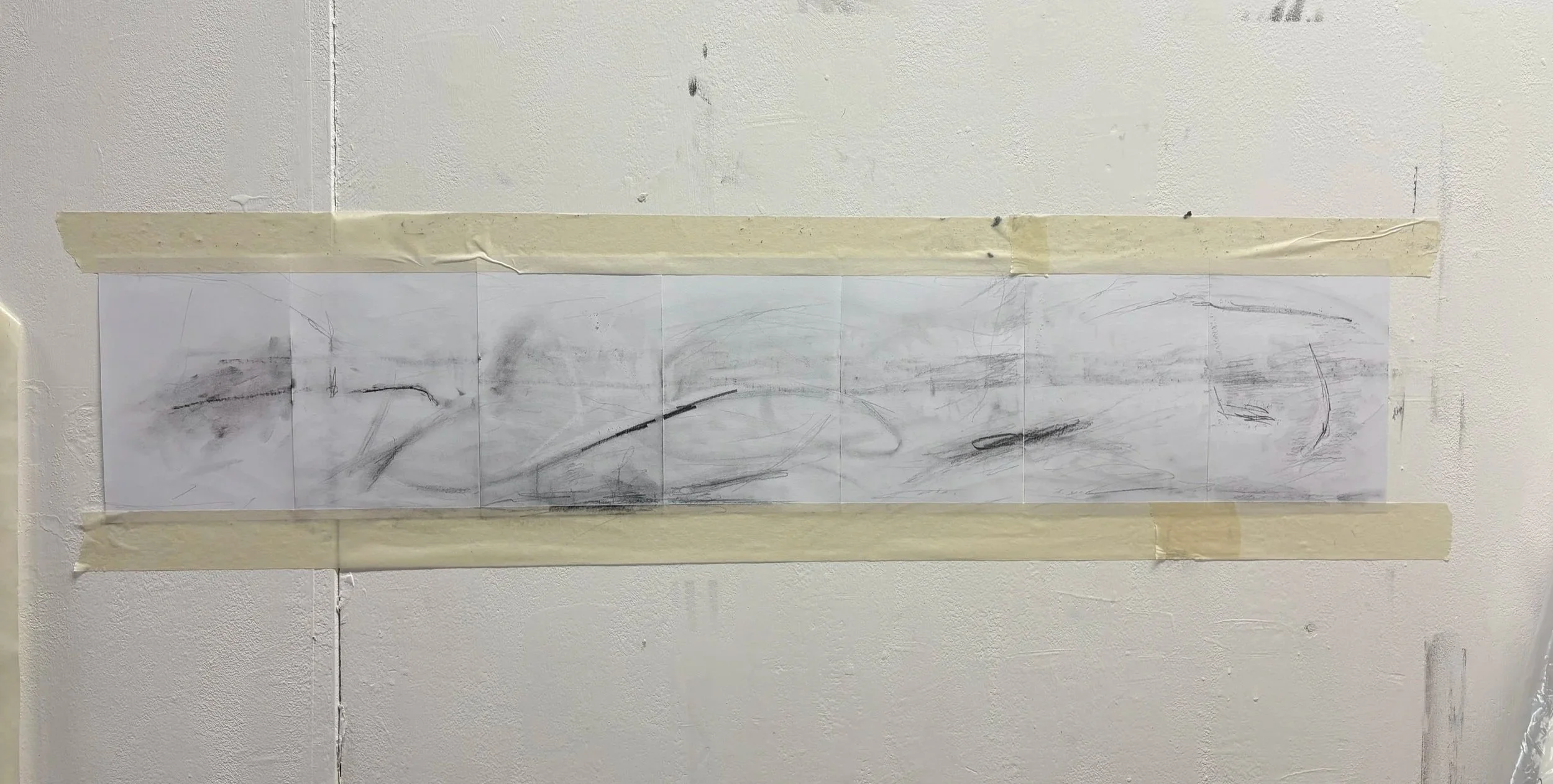
Untitled (2026) Willow charcoal, condensed charcoal, graphite powder and pencilsGrief is forever; is that also the case when an artist or person is diagnosed with the disease? Do they experience grief differently?
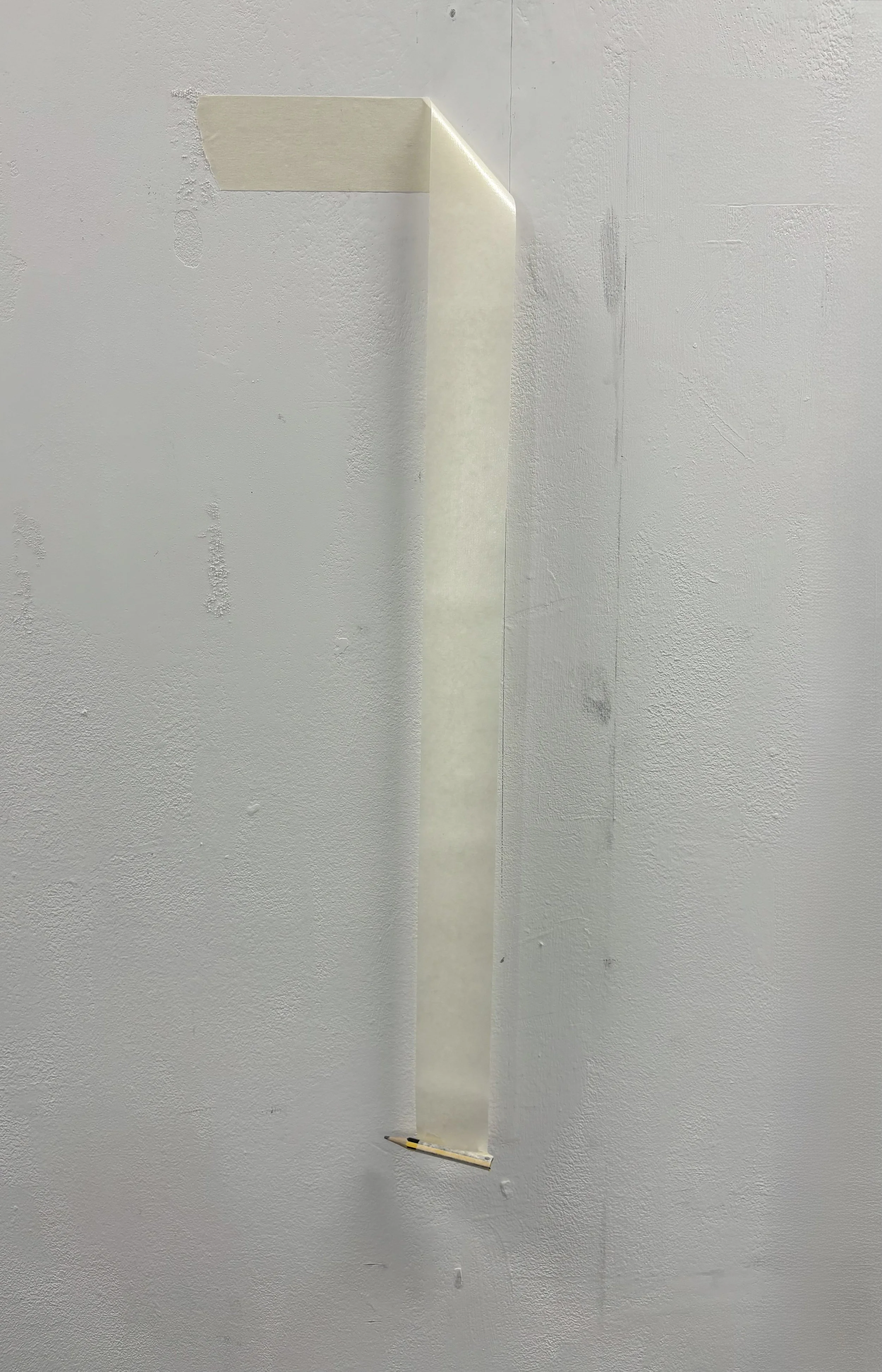
Untitled (2026) masking tape and a pencil attached to a wallThe masking tape hangs freely, barely stuck to the wall, with the pencil wrapped in its embrace at the bottom of the strip. The pencil is not heavy enough to leave direct and impactful marks on the wall, as it swings gently, the connection of the graphite and the wall never fully occurs. This is a representation of the connections lost to the artist. Family, friends, fellow artists, the list goes on. Eventually, the weight of the broken connections will eat the artist alive, and so the masking tape may eventually fall off the wall.